
Wisdom teeth extraction is a common dental procedure, but like any surgical intervention, it carries risks. One of the most significant potential complications is damage to the inferior alveolar nerve (IAN), which can lead to temporary or permanent sensory disturbances in the lower lip, chin, and teeth. While this complication is relatively rare, it can be life-altering for patients affected by it. Inferior Alveolar Nerve Injury during wisdom tooth extraction
The inferior alveolar nerve is a branch of the mandibular nerve, itself a division of the trigeminal nerve (the fifth cranial nerve). It runs through the mandibular canal, a bony passage inside the lower jaw, and supplies sensation to the lower teeth, gums, chin, and lower lip. Because of its proximity to the roots of lower wisdom teeth (third molars), the IAN is at risk of injury during extraction procedures, particularly when the tooth is impacted or positioned close to the nerve.
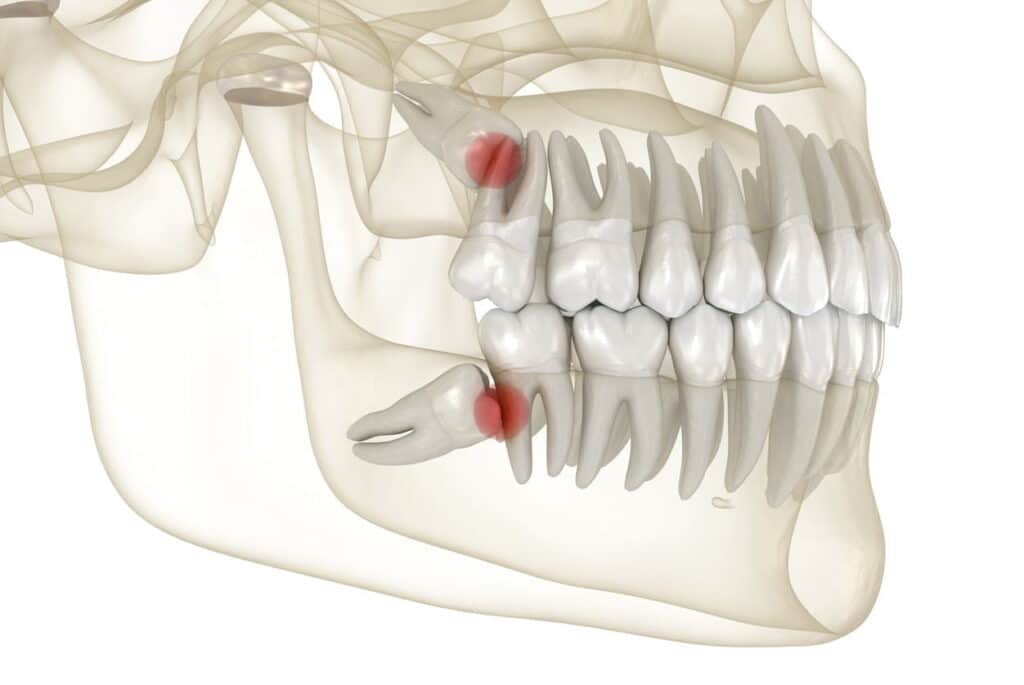
Wisdom teeth, especially those in the lower jaw (mandibular third molars), are often located near the path of the inferior alveolar nerve. When these teeth are impacted, meaning they haven’t fully erupted or are trapped beneath the gum or bone, removing them becomes more complex, increasing the risk of complications.
Ways the IAN can be injured during a wisdom tooth extraction:
- Direct Trauma: During extraction, the dentist may inadvertently contact or damage the nerve with instruments while removing the tooth or bone surrounding the tooth.
- Compression: The nerve can be compressed if the dentist applies excessive pressure or force while removing the tooth or bone.
- Stretching: Sometimes, the nerve may be stretched if the roots of the wisdom tooth are entangled with the nerve, or if the procedure requires significant manipulation of surrounding tissue.
- Post-surgical Inflammation: Swelling or bleeding following the extraction may compress the nerve, leading to temporary dysfunction.
- Root Fragment Left Behind: In some cases, a fragment of the tooth’s root may remain in proximity to the nerve, potentially causing damage or irritation.
Symptoms of Inferior Alveolar Nerve Injury
Injury to the inferior alveolar nerve can manifest in a range of sensory disturbances, depending on the extent and nature of the damage.
Common signs of IAN injury include:
- Numbness
- Tingling or “Pins and Needles” Sensation
- Pain:
- Altered Sensation:
While many cases of IAN injury resolve on their own, some patients may experience permanent sensory changes, which can significantly impact quality of life. Living with persistent numbness, pain, or altered sensation in the lower lip and chin can affect daily activities like speaking, eating, and smiling. Patients may also experience psychological distress or anxiety over the changes in their appearance or feeling.
Inferior alveolar nerve injury during wisdom tooth extraction is a rare but significant complication that can lead to long-lasting sensory changes in the lower face. While many injuries heal over time, permanent damage can profoundly affect a patient’s quality of life of this complication. Inferior Alveolar Nerve Injury during wisdom tooth extraction.
Med League can assist attorneys with a well-qualified Physician Expert specializing in Wisdom Tooth Extraction cases. Our experts can provide Affidavit of Merit, Verbal Opinions, Expert Reports and are available to provide court Testimony.
Please call us (908-788-8227) or contact us today to discuss your next case!
Request a free phone consultation and find the expert witness you need to win your case. Discover the best solution for locating and retaining case-winning Wisdom Tooth Extraction expertise.
Resources:
https://www.ncbi.nlm.nih.gov/books/NBK589668/
https://www.mayoclinic.org/tests-procedures/wisdom-tooth-extraction/about/pac-20395268
